
European foulbrood (EFB) in honey bees
European foulbrood is much more common than American foulbrood and is most often associated with colony stress including poor nutrition, crowding, weather swings, heavy moves, or other pressure on the colony.
Typical signs include larvae dying before capping, a scattered or uneven brood pattern, twisted or melted-looking larvae, and larvae turning from white to yellow or brown. A mild sour or unpleasant odor may be present, but is not a consistent or defining feature.
EFB responds to antibiotic treatment, but antibiotics do not address the underlying stressors that let the disease take hold.
Visual signs of EFB
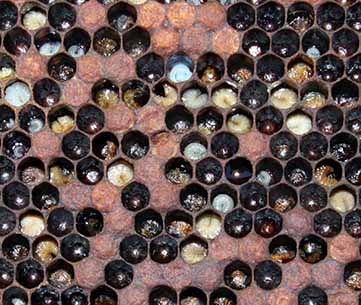
Larvae dying before capping
Larvae often die in open cells before they are capped, leading to an uneven or spotty brood pattern.
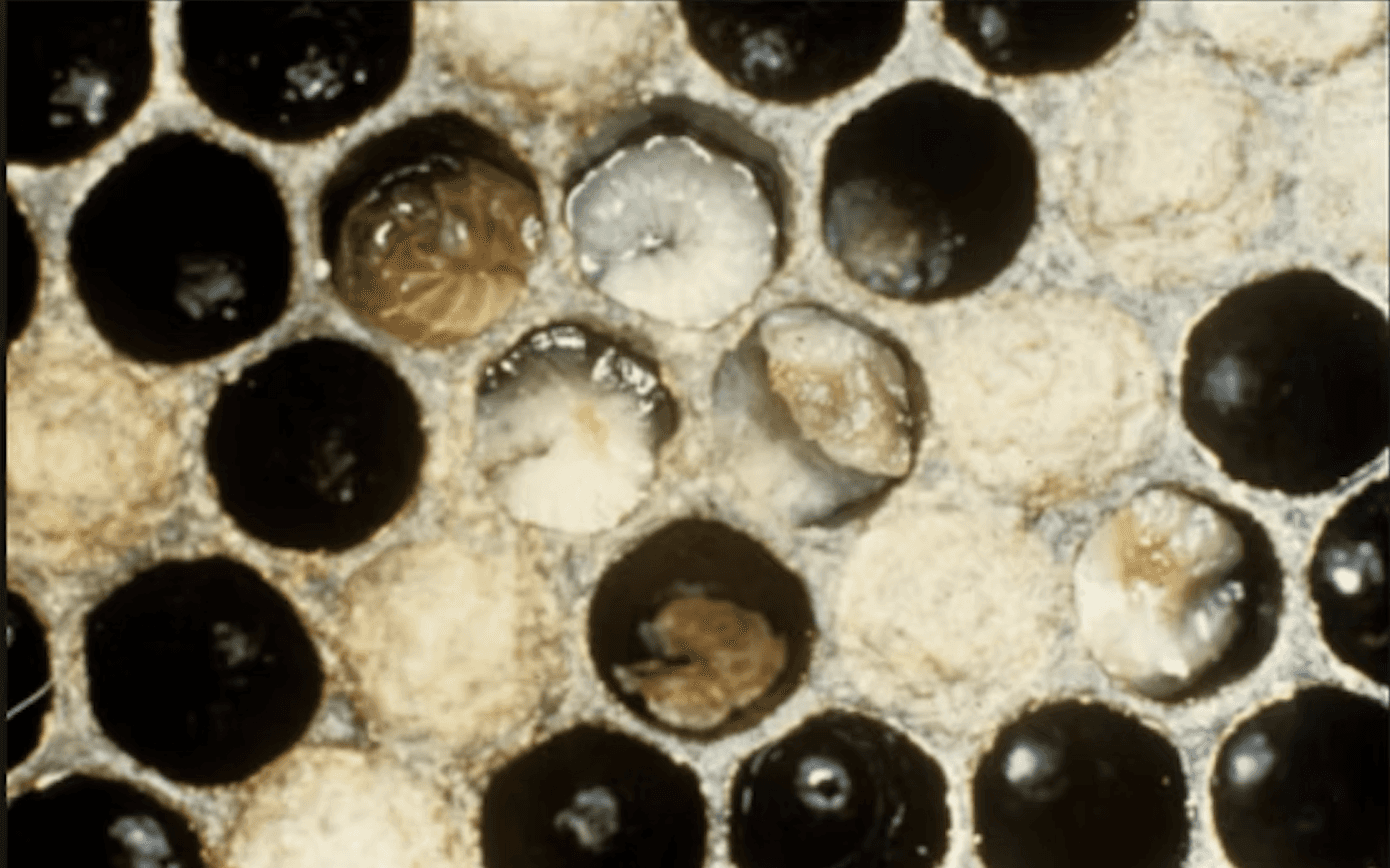
Twisted or melted-looking larvae
Larvae may appear out of position in the cell, twisted or collapsed, rather than lying in a normal “C” shape.
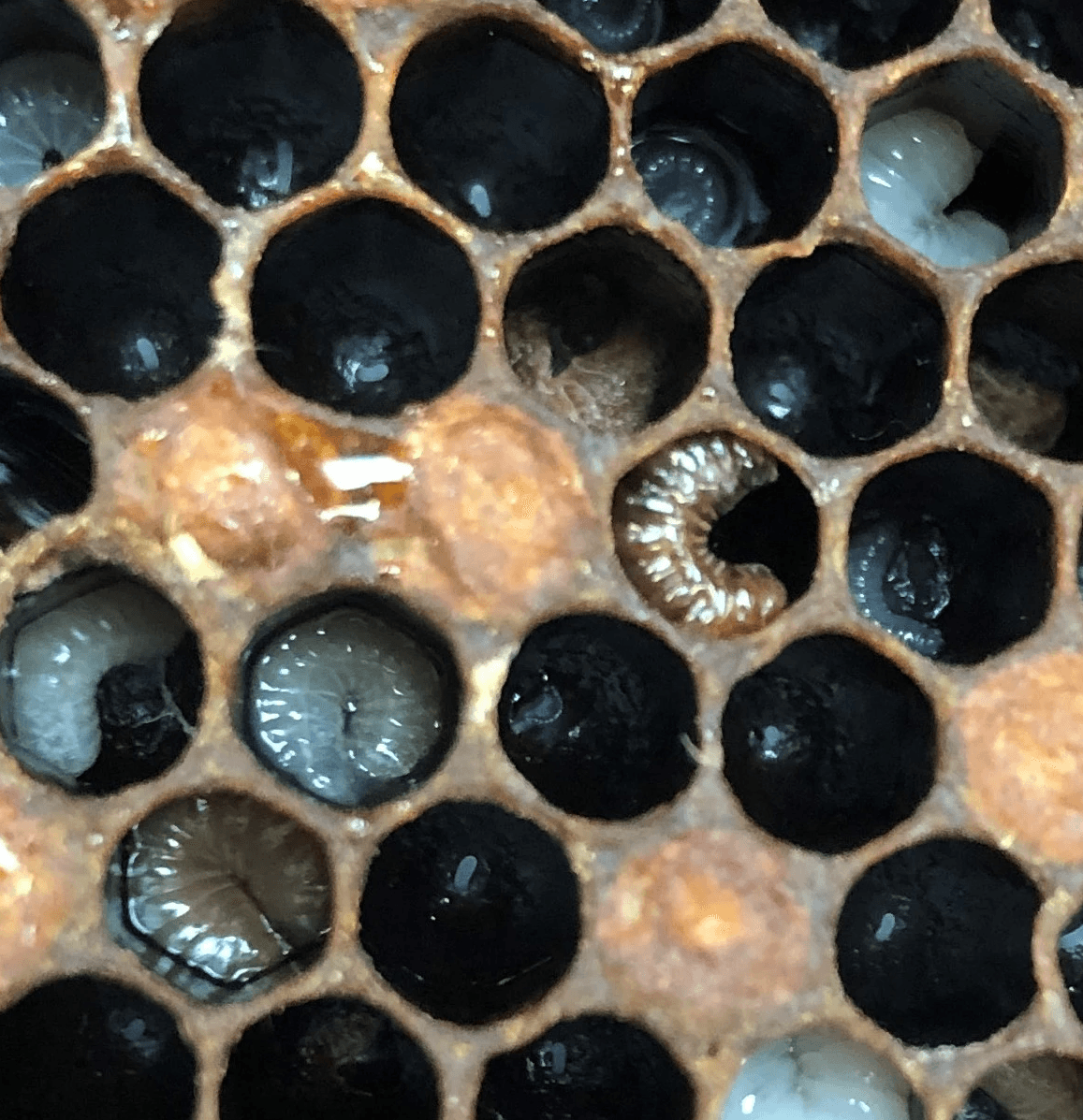
Larvae turning yellowish to brown
Affected larvae lose their pearly white appearance and become yellow, then brown as they deteriorate.
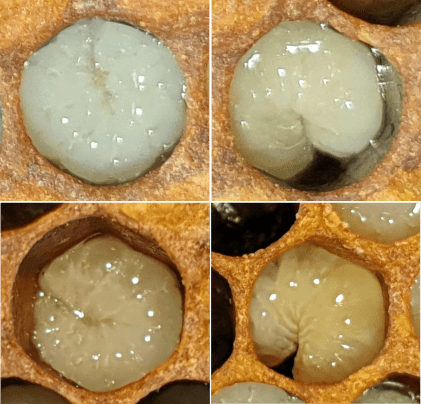
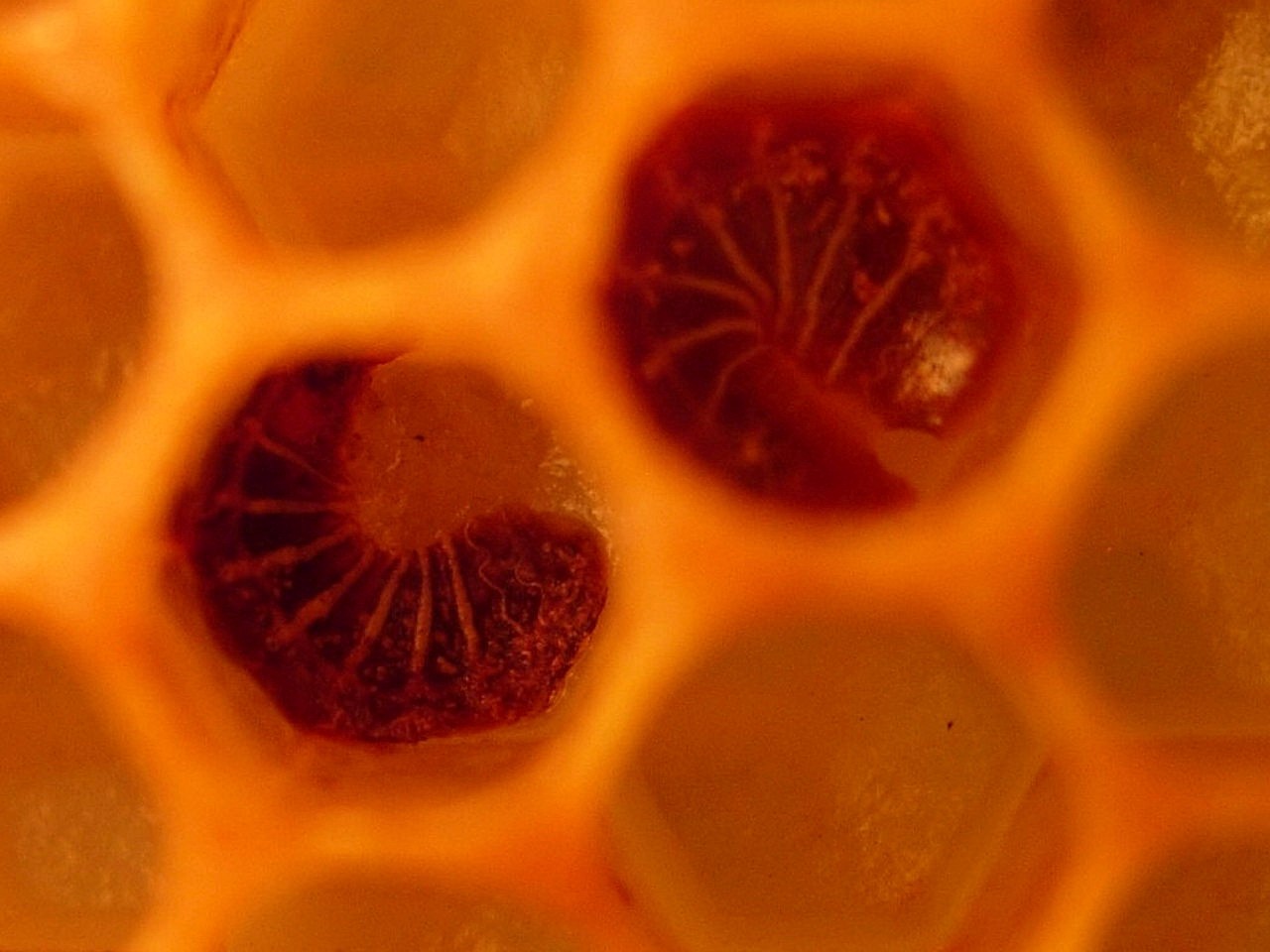
Prominent tracheal lines
The internal tracheal system may becomes more visible as the body breaks down, creating a segmented or ringed appearance.
European foulbrood (EFB) in honey bees
European foulbrood is much more common than American foulbrood and is most often associated with colony stress including poor nutrition, crowding, weather swings, heavy moves, or other pressure on the colony.
Typical signs include larvae dying before capping, a scattered or uneven brood pattern, twisted or melted-looking larvae, and larvae turning from white to yellow or brown. A mild sour or unpleasant odor may be present, but is not a consistent or defining feature.
EFB responds to antibiotic treatment, but antibiotics do not address the underlying stressors that let the disease take hold.
Visual signs of EFB
Larvae dying before capping
Larvae often die in open cells before they are capped, leading to an uneven or spotty brood pattern.
Twisted, melted-looking larvae
Larvae may appear out of position in the cell, twisted or collapsed, rather than lying in a normal “C” shape.
Larvae turning yellowish to brown
Affected larvae lose their pearly white appearance and become yellow, then brown as they deteriorate.
Prominent tracheal lines
The internal tracheal system may becomes more visible as the body breaks down, creating a segmented or ringed appearance.
European foulbrood (EFB) in honey bees
European foulbrood is much more common than American foulbrood and is most often associated with colony stress including poor nutrition, crowding, weather swings, heavy moves, or other pressure on the colony.
Typical signs include larvae dying before capping, a scattered or uneven brood pattern, twisted or melted-looking larvae, and larvae turning from white to yellow or brown. A mild sour or unpleasant odor may be present, but is not a consistent or defining feature.
EFB responds to antibiotic treatment, but antibiotics do not address the underlying stressors that let the disease take hold.
Visual signs
of EFB
Larvae dying before capping
Larvae often die in open cells before they are capped, leading to an uneven or spotty brood pattern.
Twisted or melted-looking larvae
Larvae may appear out of position in the cell, twisted or collapsed, rather than lying in a normal “C” shape.
Larvae turning yellowish to brown
Affected larvae lose their pearly white appearance and become yellow, then brown as they deteriorate.
Prominent tracheal lines
The internal tracheal system may becomes more visible as the body breaks down, creating a segmented or ringed appearance.
How a diagnosis is made
Diagnosis is often based on brood appearance, with testing
used when needed to confirm.
Visual exam
EFB is typically suspected based on uncapped larval death, color change, and an uneven brood pattern.
Field Assessment
The rope test is used to help rule out AFB. Larvae affected by EFB do not form a rope when probed. Field test kits may be used when the diagnosis is uncertain.
Laboratory confirmation
Samples can be submitted for confirmation when findings are unclear or when a definitive diagnosis is needed.
How a diagnosis is made
Diagnosis is often based on brood appearance, with testing
used when needed to confirm.
Visual exam
EFB is typically suspected based on uncapped larval death, color change, and an uneven brood pattern.
Field Assessment
The rope test is used to help rule out AFB. Larvae affected by EFB do not form a rope when probed. Field test kits may be used when the diagnosis is uncertain.
Laboratory confirmation
Samples can be submitted for confirmation when findings are unclear or when a definitive diagnosis is needed.
How a diagnosis
is made
Diagnosis is often based on brood appearance, with testing
used when needed to confirm.
Visual exam
EFB is typically suspected based on uncapped larval death, color change, and an uneven brood pattern.
Field Assessment
The rope test is used to help rule out AFB. Larvae affected by EFB do not form a rope when probed. Field test kits may be used when the diagnosis is uncertain.
Laboratory confirmation
Samples can be submitted for confirmation when findings are unclear or when a definitive diagnosis is needed.
Treatment and management
European foulbrood is managed with a combination of antibiotic treatment when indicated and improvement of colony conditions.
Antibiotic treatment
Oxytetracycline is the standard labeled antibiotic for European foulbrood. Antibiotics are used when clinical disease is present and require veterinary authorization. Depending on the product, this may be a Veterinary Feed Directive or a prescription.
Improve colony conditions
Antibiotics do not address the underlying cause. Recovery depends on strengthening the colony:
Support nutrition during dearth
Requeen if brood pattern or queen quality is poor
Reduce stress from movement, crowding, or environmental pressure
Comb and brood management
In more advanced cases, removing heavily affected brood frames can help reduce bacterial load and support recovery.
Treatment and management
European foulbrood is managed with a combination of antibiotic treatment when indicated and improvement of colony conditions.
Antibiotic treatment
Oxytetracycline is the standard labeled antibiotic for European foulbrood. Antibiotics are used when clinical disease is present and require veterinary authorization. Depending on the product, this may be a Veterinary Feed Directive or a prescription.
Improve colony conditions
Antibiotics do not address the underlying cause. Recovery depends on strengthening the colony:
Support nutrition during dearth
Requeen if brood pattern or queen quality is poor
Reduce stress from movement, crowding, or environmental pressure
Comb and brood management
In more advanced cases, removing heavily affected brood frames can help reduce bacterial load and support recovery.
Treatment and management
European foulbrood is managed with a combination of antibiotic treatment when indicated and improvement of colony conditions.
Antibiotic treatment
Oxytetracycline is the standard labeled antibiotic for European foulbrood. Antibiotics are used when clinical disease is present and require veterinary authorization. Depending on the product, this may be a Veterinary Feed Directive or a prescription.
Improve colony conditions
Antibiotics do not address the underlying cause. Recovery depends on strengthening the colony:
Support nutrition during dearth
Requeen if brood pattern or queen quality is poor
Reduce stress from movement, crowding, or environmental pressure
Comb and brood management
In more advanced cases, removing heavily affected brood frames can help reduce bacterial load and support recovery.